
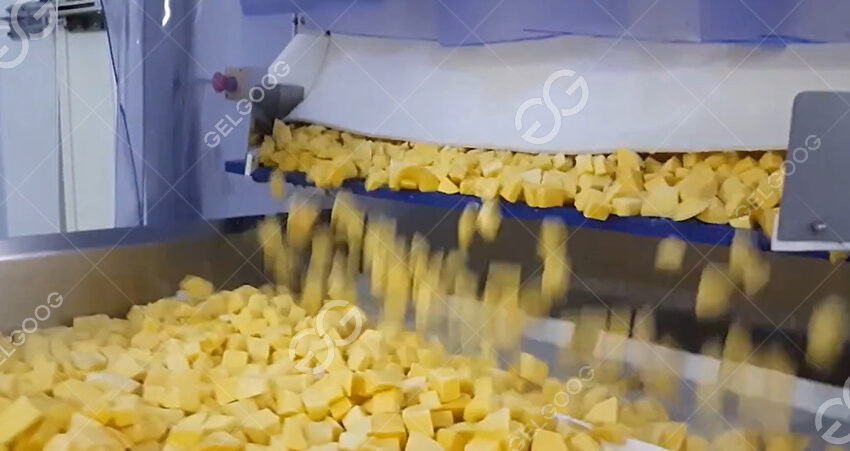
To make quick-frozen IQF diced mango, you need an IQF quick-freezer. IQF quick-freezing machine is a high-efficiency freezing equipment, which can realize continuous quick-freezing of diced mango with good quick-freezing effect, simple and convenient operation and low energy consumption.
The worker sends the frozen product tray containing the diced mangoes to be frozen into the quick-freezing track through the quick-freezing inlet and moves to the outlet direction under the action of manpower. Vertical annular low-temperature airflow, this low-temperature airflow exchanges heat with the frozen diced mangoes moving horizontally, thereby realizing the rapid cooling and freezing process.
What is IQF Technology?
IQF (Individual Quick Frozen) quick-freezing technology is the world’s leading single-unit quick-freezing technology, which can instantly freeze materials at low temperatures and retain the original ecological flavor of materials.
For diced mangoes frozen with IQF quick-freezing technology, it is like “frozen face”, time stops instantly, and it always maintains its fresh state.
Using this rapid cooling technology, it can also retain the nutrients of mangoes, inhibit the growth of microorganisms, be healthier, more hygienic, more convenient for storage, and taste better.
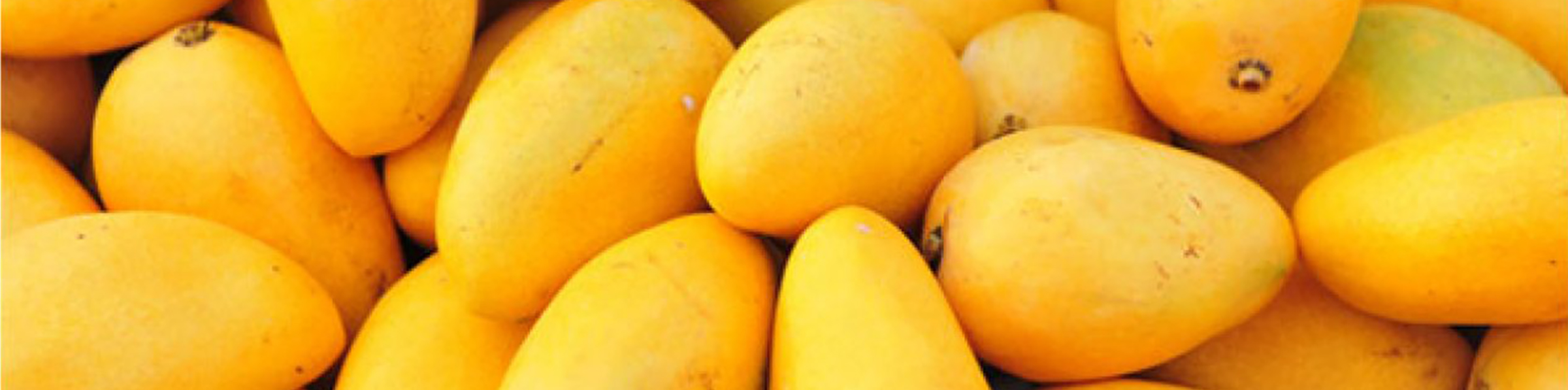
Mango has low acid content, sugar-acid ratio is about 40, and vitamin C content is not too high, but the content of beta-carotene ranks first among tropical fruits. Quick-frozen IQF diced mango is a quick-frozen mango product made by dicing fresh ripe mangoes through a series of processing processes. Today, the editor will lead you to learn how to make quick-frozen IQF diced mango.
Process flow of IQF mango diced
1. Choose fruit. Choose ripe, juicy, shiny fresh mangoes, and remove rotten and residual fruit;
2. Wash. Rinse with running water to remove impurities such as dust, sediment and microorganisms adhering to the surface of the peel. Or use a drum cleaning machine for cleaning, and use the friction between the fruit and the drum wall to wipe off the sediment and other impurities on the surface;
3. Peel, core and cut into pieces. The cleaned mangoes are immediately peeled, pitted and cut into pieces. Manual peeling, pitting, and dicing can be used (note that the mango pulp should not directly touch the metal surface, and a stainless steel knife should be used for dicing), and then the diced mangoes are sent to the pre-cooking machine by the conveyor belt for pre-cooking;
4. Blanch and cool. The diced mango is directly blanched with steam, and the blanching temperature is controlled above 100°C for 1 to 2 minutes. Protect the color of fruit pieces by blanching and reduce the loss of pulp juice. The diced mango should be cooled immediately after blanching to prevent the diced mango from becoming soft;
5. Soak in sugar at low temperature. The mango diced after being cooled in the cooling tank is put into a low-temperature sugar solution for low-temperature dipping. The concentration of sugar solution is generally between 25 and 35 Brix;
6. Packing and sealing. The fruit pieces after being soaked in sugar at low temperature are bagged according to the ratio of fruit pieces to sugar liquid of 3:1, and heat-sealed with a vacuum sealing machine;
7. Quick freeze. Immediately freeze the bagged and sealed diced mangoes at a temperature of minus 35°C to minus 40°C, and strive to complete it in a short time, so that the water in the pulp can be frozen into small ice crystals in the original position without causing tissue damage. Destruction, so that the product reduces the loss of nutrients after thawing;
8. Inspection and packing. The quick-frozen fruit pieces are inspected and can be packed after passing the test;
9. Cryopreservation. After packing, it should be stored at a low temperature of minus 18 ℃ – minus 20 ℃.
The processing of fresh and ripe mangoes into quick-frozen IQF diced mangoes can maintain the original flavor, color and nutrients of mangoes, prolong the storage time of mangoes, facilitate long-distance transportation, and reduce labor costs and logistics costs. This processing method will be favored by practitioners as a new track for mango processing.