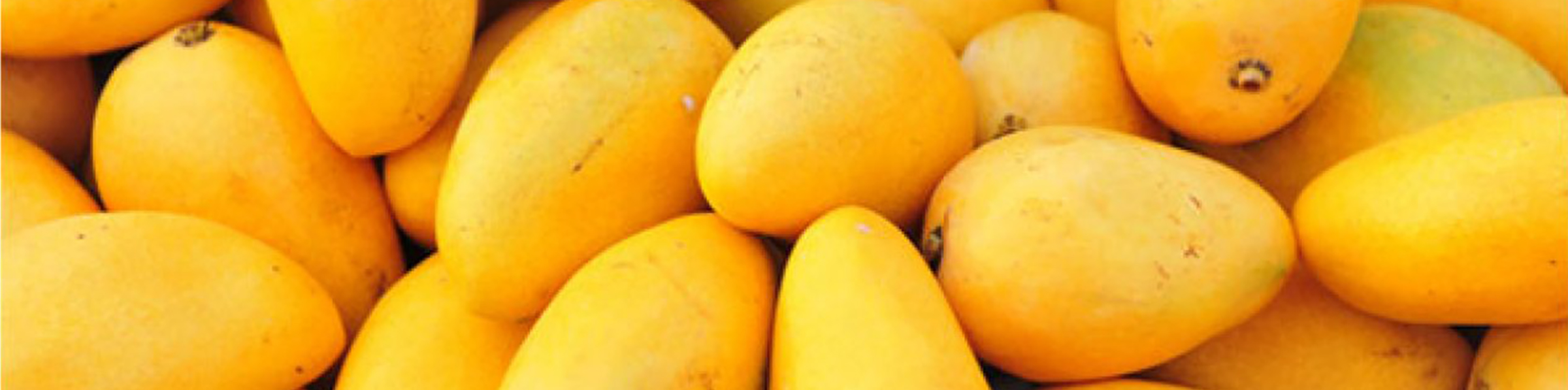


Cutting mangoes at an industrial scale requires speed, consistency, and safety—all while preserving the fruit’s freshness and appeal for customers. Whether you supply grocery stores, food processors, or restaurants, following a structured process ensures you maximize yield, reduce waste, and meet quality standards. How to cut mango for sale?Here’s a step-by-step guide, easy to implement for teams of any size.
- Pre-Process: Sort and Clean Mangoes First
Before cutting, start with quality control. Industrial operations often use conveyor belts to sort mangoes by ripeness and size:
Ripeness check: Avoid overripe mangoes (soft, spotty skin) or underripe ones (hard, green flesh)—both lead to waste. Ripe mangoes yield slightly to gentle pressure and have a sweet aroma.
Washing: Use a commercial fruit washer with food-safe sanitizer to remove dirt, pesticides, or bacteria. This step is non-negotiable for food safety compliance
- Choose the Right Tools for Industrial Speed
Manual knives work for small batches, but industrial settings need equipment to handle thousands of mangoes daily:
Mango splitting machines: These devices quickly remove the large, flat seed by slicing the mango into two equal “cheeks” . Look for machines with adjustable blades to fit different mango varieties
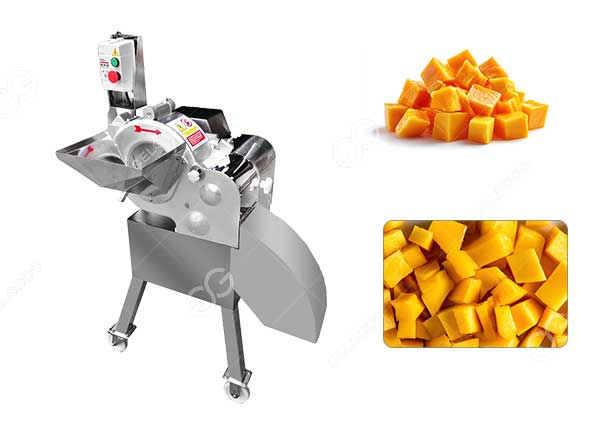
Dicing/cubing tools: After splitting, use automated dicers to cut cheeks into uniform pieces (common sizes: 1cm, 2cm cubes). Uniformity matters for packaging—customers expect consistent portions.
Safety gear: Mandate cut-resistant gloves for workers and ensure machines have emergency stop buttons to prevent injuries.
- Step-by-Step Cutting Process
Follow this flow to keep operations smooth:
Position the mango: Place each mango on the splitting machine with the stem end facing up. The machine’s guides will align it to avoid cutting through the pit.
Split into cheeks: The mango cutter slices along both sides of the pit, separating the two fleshy cheeks from the central seed. Collect the pits (they can be repurposed for juice or compost).
Remove skin (optional): For pre-peeled mangoes, use a commercial fruit peeler—this saves time compared to manual peeling. If selling with skin, skip this step but ensure the skin is clean.
Cut to desired shape: Use dicers, slicers, or chunkers to create the final product . Collect cut mangoes in food-grade bins to prevent contamination.
- Post-Cutting: Preserve Freshness for Sale
Industrial cutting exposes mango flesh to air, so act fast to keep it fresh:
Chill immediately: Transfer cut mangoes to a cold storage room within 30 minutes. This slows browning and bacterial growth.
Package properly: Use sealed, transparent containers or vacuum-sealed bags—clear packaging lets customers see the mango’s quality. Label with a “best before” date .By following these steps, you’ll streamline your industrial mango-cutting process, reduce waste, and deliver a product that keeps customers coming back. Consistency and safety are key—invest in good equipment and train your team, and you’ll boost efficiency and profits.